
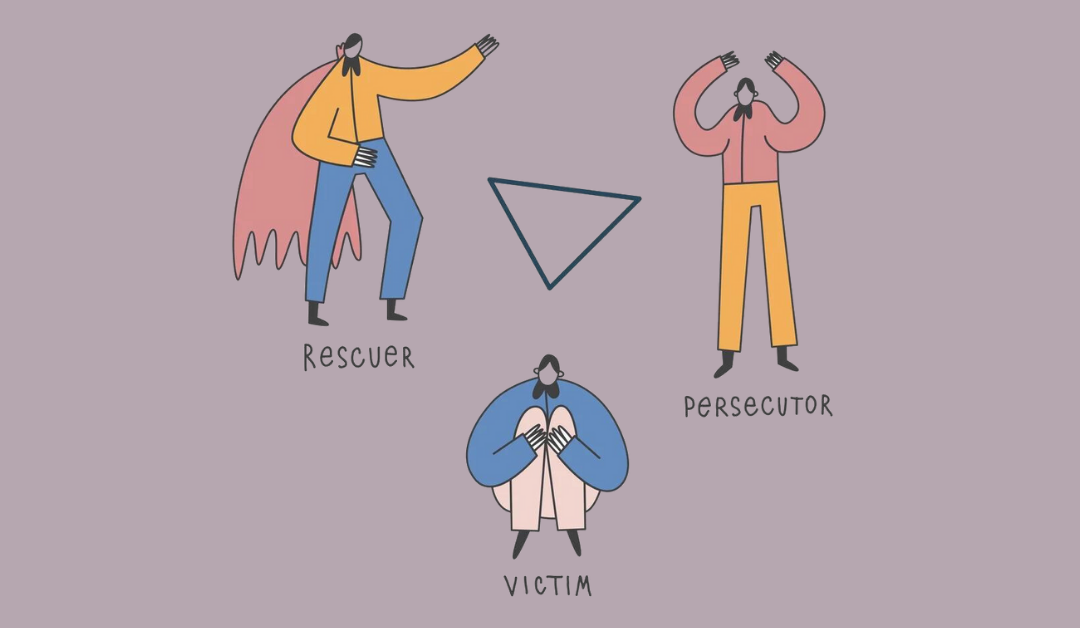
In past (or present) relationships, have you ever felt like you were the one being mistreated, like you had to save someone else from their problems, or was the one being blamed and criticized for everything that went wrong? If so, you may be caught in what is known as the Drama Triangle.
The Drama Triangle is a psychological model that was first introduced by Stephen Karpman in the 1960s. It is a cycle of destructive behavior that can be found in many personal and professional relationships, leading to a never-ending cycle of conflict and tension. In this blog, we’ll take a closer look at the Drama Triangle and how it can be recognized and broken in relationships.
The Three Roles of the Drama Triangle
The Drama Triangle consists of three roles: the victim, the rescuer, and the perpetrator. These roles are not static and can be switched between different individuals in the same relationship.
Here is a brief overview of each role.
The Victim:
The victim is a person who sees themselves as helpless and powerless in a situation. They may feel that they are the recipients of negative events and that they are not in control of their own lives. They may also blame others for their problems and seek comfort and support from others.
The Rescuer:
The rescuer is a person who sees themselves as the solution to the victim’s problems. They may feel that it is their duty to save the victim and that they are the only ones who can do so. They may also feel a sense of superiority and control over the victim, leading to a distorted power dynamic.
The Perpetrator:
The perpetrator is a person who is seen as the cause of the victim’s problems. They may act in an aggressive or controlling manner and see themselves as superior to the victim. They may also try to manipulate or control the victim and the rescuer to maintain their position of power.
The Cycle of the Drama Triangle
The Drama Triangle operates in a never-ending cycle, with each role feeding into the next. The victim seeks help from the rescuer, who then tries to save them, leading to the perpetrator’s retaliation. This cycle can be repeated again and again, leading to a continuous cycle of conflict and tension in the relationship.
Breaking the Cycle
Breaking the cycle of the Drama Triangle requires a conscious effort and a willingness to change. Here are a few steps that can help.
Awareness:
The first step in breaking the cycle is to become aware of it. Identify the roles that you and your partner are playing in the relationship and how they feed into the cycle. This can be a difficult process, but it is crucial in recognizing and addressing the underlying issues.
Responsibility:
Once you have become aware of the cycle, it is important to take responsibility for your actions and how they contribute to the dynamic. This means recognizing and acknowledging your own behavior and how it affects the relationship.
Communication:
Effective communication is key in breaking the cycle. Open and honest conversations about the dynamics of the relationship and how to change them can help to create a more balanced and supportive dynamic.
Empowerment:
Breaking the cycle of the Drama Triangle also involves empowering yourself and others. This means building self-esteem, taking control of your own life, using assertive communication, and giving others the opportunity to do the same.
Support:
Finally, it is important to seek support in breaking the cycle. This can involve seeking therapy or counseling, joining a support group, or simply reaching out to trusted friends and family.
Conclusion
In conclusion, the Drama Triangle is a model that helps to explain the destructive cycles that can occur in relationships. By understanding the roles of the victim, rescuer, and perpetrator, individuals can recognize when they are caught in this cycle and work to break it.
Breaking the cycle requires a conscious effort and a willingness to change, including taking responsibility for one’s actions, engaging in effective communication, empowering oneself and others, and seeking support. By breaking the Drama Triangle cycle, individuals can create healthier and more fulfilling relationships, leading to greater happiness and satisfaction in all areas of life.